
How Anthology Series Bring Fresh Ideas to Television

Television audiences often enjoy returning to familiar characters, but there is also something exciting about beginning a completely new story. Anthology series offer both possibilities. They can maintain a recognizable tone or creative identity while introducing different characters, settings, conflicts, and themes from one season or episode to the next.
This format gives writers the freedom to explore ideas that may not need several seasons to develop. A mystery can reach a complete conclusion, a character can experience a full emotional journey, and a fictional world can be explored without being extended beyond its natural ending.
The appeal of anthology TV series and fresh storytelling comes from this balance between familiarity and change. Viewers may recognize the style of the series, but they cannot always predict what kind of story will appear next.
Every New Story Creates a Fresh Starting Point
Starting a long-running television series can sometimes feel difficult. New viewers may need to understand several seasons of history before they can fully follow the current story. An anthology series usually removes that barrier by offering a new starting point with each separate chapter.
A new season may introduce an entirely different family, location, mystery, or period in history. In an episodic anthology, the change can happen even more frequently, with every episode presenting its own characters and conflict. This makes the format accessible because viewers can often begin without needing extensive knowledge of earlier stories.
The clean starting point also creates curiosity. Audiences must learn the rules of the new world, understand the personalities of unfamiliar characters, and discover what kind of problem will shape the story. That process can make each installment feel like a new television event.
Writers Can Explore Different Genres
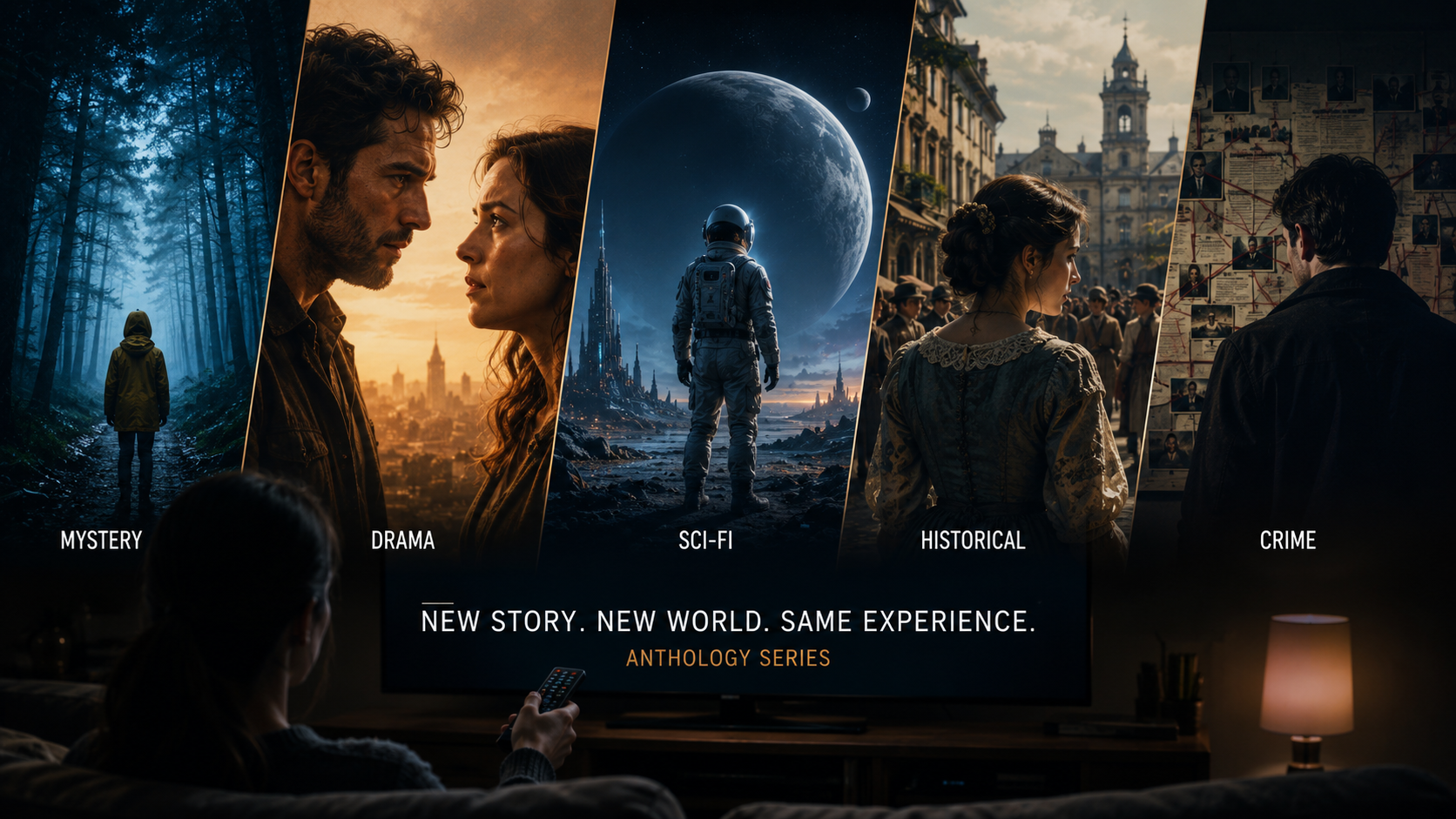
Anthology television is not limited to one type of story. A series can explore crime, mystery, romance, science fiction, horror, family drama, or historical events while still maintaining a consistent creative identity. The connection between installments may come from mood, theme, visual style, or the kinds of questions the stories ask.
This flexibility allows creators to experiment. One season may be quiet and character-focused, while the next may be larger, darker, or more suspenseful. A series can respond to new ideas without forcing them into an existing storyline where they might not naturally belong.
Genre changes also give viewers more variety. Audiences may discover a type of story they would not normally choose because they already trust the overall quality or style of the anthology.
Characters Receive Complete Emotional Journeys
One of the strongest advantages of an anthology format is the opportunity to plan a character’s journey from beginning to end. Writers generally know how much time they have, which makes it easier to build a focused emotional arc.
A character can begin with a clear problem, face increasingly difficult choices, and reach a meaningful conclusion without the story needing to create another conflict simply to continue into a future season. This can make development feel more purposeful.
Complete character journeys can also create stronger endings. The audience understands that the story may not return to these characters, so final decisions and emotional resolutions carry additional weight.
New Casts Bring Different Energy
Changing the cast gives each installment its own personality. New performers bring different acting styles, chemistry, and emotional energy. Even when the series keeps the same creative team, a new cast can make the experience feel noticeably different.
This structure can also give actors the opportunity to take on complex roles without committing to many years of production. A performer can explore an intense character within one complete story and then move to a different project.
For audiences, the arrival of a new cast creates another reason to watch. Viewers become curious about how the performers will shape the latest story and whether the new group will create the same emotional impact as earlier installments.
A Familiar Identity Can Connect Different Stories
Although anthology installments may feature different characters and plots, the series still needs a recognizable identity. That connection can come from the visual direction, music, atmosphere, central theme, or storytelling approach.
A crime anthology may examine how different communities respond to difficult investigations. A science-fiction anthology may use separate stories to explore the relationship between people and technology. A family anthology may focus on how relationships change under pressure.
The general concept of an anthology storytelling format allows separate narratives to exist within one larger program. This gives creators room to change the details while maintaining an idea that connects the entire series.
Defined Endings Can Improve Story Focus
Television stories sometimes continue longer than their original conflict can support. When a series becomes successful, there may be pressure to add more seasons even after the central story has reached a natural conclusion.
Anthology series reduce that problem because each installment is usually designed to end. The writers can move toward a planned conclusion without needing to leave every conflict open for the future. This helps the story remain focused.
A defined ending can also increase tension. Viewers know that important choices are likely to have lasting consequences. A character cannot depend on another season to correct every mistake or delay every difficult decision.
Viewers Can Compare Different Installments
Anthology series naturally encourage discussion because audiences often compare one installment with another. Some viewers may prefer a particular cast, setting, mystery, or emotional tone. Others may enjoy seeing how the same creative themes are handled in different ways.
These comparisons can keep the wider series active between seasons. Fans discuss which story felt most complete, which characters were most memorable, and which setting created the strongest atmosphere.
The conversation does not always need to produce one clear winner. Different installments may appeal to different viewers, and that variety is part of the format’s strength.
Creative Risks Become Easier to Take
A traditional series must consider how every major decision will affect future episodes and seasons. An anthology has more freedom because a creative risk does not always need to become a permanent part of the entire program.
Writers can experiment with unusual structures, unfamiliar settings, darker conclusions, or characters who make irreversible choices. If an idea works best within one contained story, it can remain there without changing everything that follows.
This freedom can make anthology television feel unpredictable. Audiences know the series may take them somewhere completely different when a new installment begins.
Why Anthology TV Series Continue to Feel Fresh
Anthology TV series remain appealing because they understand that audiences can value both consistency and surprise. The overall program can maintain a familiar standard while each story introduces something new.
New casts, complete character journeys, changing settings, and defined endings allow the format to renew itself regularly. Viewers can enjoy the satisfaction of a finished story while still having another original installment to anticipate.
For TV Serial News, anthology series are an important part of modern television coverage. They show how a flexible format can support creative risks, memorable performances, and stories that end at the right moment instead of continuing only because an audience is still watching.